Crossmap Book ClubCrossmap Books
Categories
  1. Home
  2. Has Science Killed God?: The Faraday Papers on Science and Religion

Has Science Killed God?: The Faraday Papers on Science and Religion

Denis Alexander
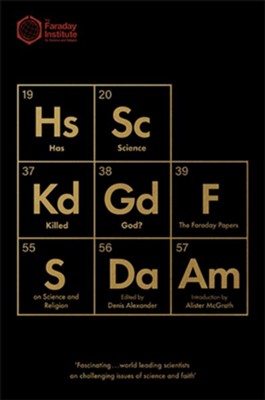
Cover of Has Science Killed God?: The Faraday Papers on Science and Religion
  • ISBN: 0281081336, 9780281081332
  • Page count: 240
  • Published: 2020
  • Format: Hardcover
  • Publisher: SPCK Publishing

The Faraday Institute for Science and Religion is a UK educational charity and a member of the Cambridge Theological Federation which is an affiliate of Cambridge University. In addition to academic research, the Institute engages in the public understanding of science and religion using courses, conferences, lectures, seminars, and the media. The Faraday Papers provide the general reader with accessible and readable introductions to the relationship between science and religion, written by a broad range of authors who are experts in the field. They are intended to be read by those without a scientific background. Here they are collected for the first time into a single volume.

Show More

Get the Book


Buy digital
  • Barnes & Nobles$14.99
Buy print
  • Christianbook$13.49
  • Barnes & Nobles$41.99
  • Barnes & Nobles$35.99
Categories: Academic, Missions Evangelism & Apologetics, Theology, Closeouts

Similar Books

  • Seeking Refuge: On the Shores of the Global Refugee Crisis

    Stephan Bauman, Matthew Soerens & Dr Issam Smeir
  • Triumph: The Power and the Glory of the Catholic Church - A 2,000 Year History (Updated and Expanded)

    H.W. Crocker
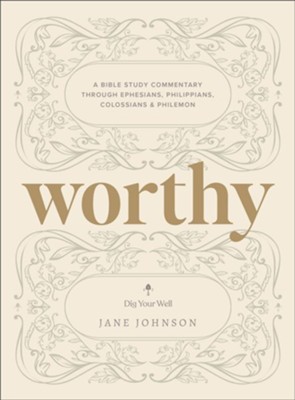
  • Worthy: A Bible Study Commentary Through Ephesians, Philippians, Colossians, and Philemon

  • Wisdom, Knowledge, and Faith: New Essays on the Future of Theology and the Episcopal Church

    Kelli Joyce, Robert MacSwain & Sean W. Rowe
  • Wild at Heart Study Guide plus Streaming Video, Updated Edition: Discovering the Secret of a Man's Soul - eBook

    John Eldredge
  • Why Christianity Makes Sense

    Gavin Ortlund
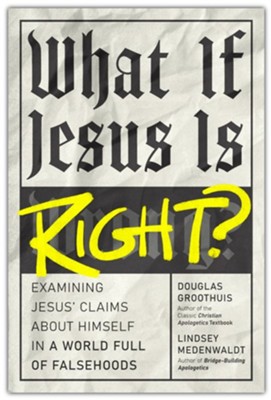
  • What If Jesus Is Right?: Examining Jesus' Claims About Himself in a World Full of Falsehoods

    Douglas Groothuis & Lindsey Medenwaldt
  • What Has Christianity Ever Done for Scotland: Challenging Today from the Past

    Paul James-Griffiths
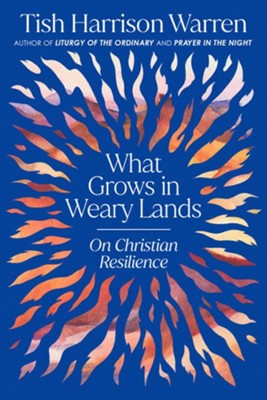
  • What Grows in Weary Lands: On Christian Resilience

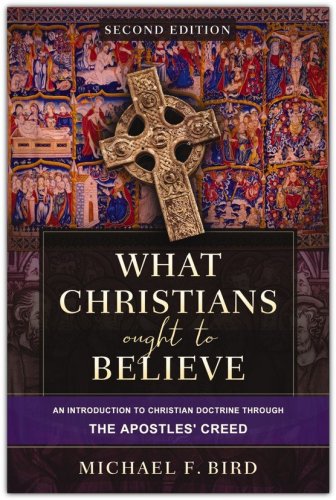
  • What Christians Ought to Believe, Second Edition: An Introduction to Christian Doctrine through the Apostles' Creed - eBook

    Michael F. Bird
  • What Christians Ought to Believe: An Introduction to Christian Doctrine through the Apostles' Creed, 2nd Edition

  • Weathering the Storm: Navigating the Anti-Social Justice Wave

    Tiffany G. Townsend

About the Author

Denis Alexander

Denis Alexander is the Emeritus Director of the Faraday Institute for Science and Religion, originally founded at St Edmund's College, Cambridge, where he is a Fellow. Dr Alexander was previously Chairman of the Molecular Immunology Program and Head of the Laboratory of Lymphocyte Signalling and Development at The Babraham Institute, Cambridge. Prior to that he was at the Imperial Cancer Research Laboratories in London (now Cancer Research UK), and spent 15 years developing university departments and laboratories overseas, latterly as Associate Professor of Biochemistry in the Medical Faculty of the American University of Beirut, Lebanon. There he helped to establish the National Unit of Human Genetics. He was initially an Open Scholar at Oxford reading Biochemistry, before obtaining a PhD in Neurochemistry at the Institute of Psychiatry in London.

Alister McGrath is Professor of Theology, Ministry and Education, Head of the Centre for Theology, Religion and Culture at King's College London and a prolific author. His recent books for SPCK include Heresy and, with Joanna Collicutt McGrath, the international bestseller, The Dawkins Delusion?

Show More
Go to Homepage

Browse all book categories →

  • About us
  • Statement of faith
  • Privacy policy
  • Terms of condition
  • Contact us
Copyright © 2026 Crossmap.com. All Rights Reserved.